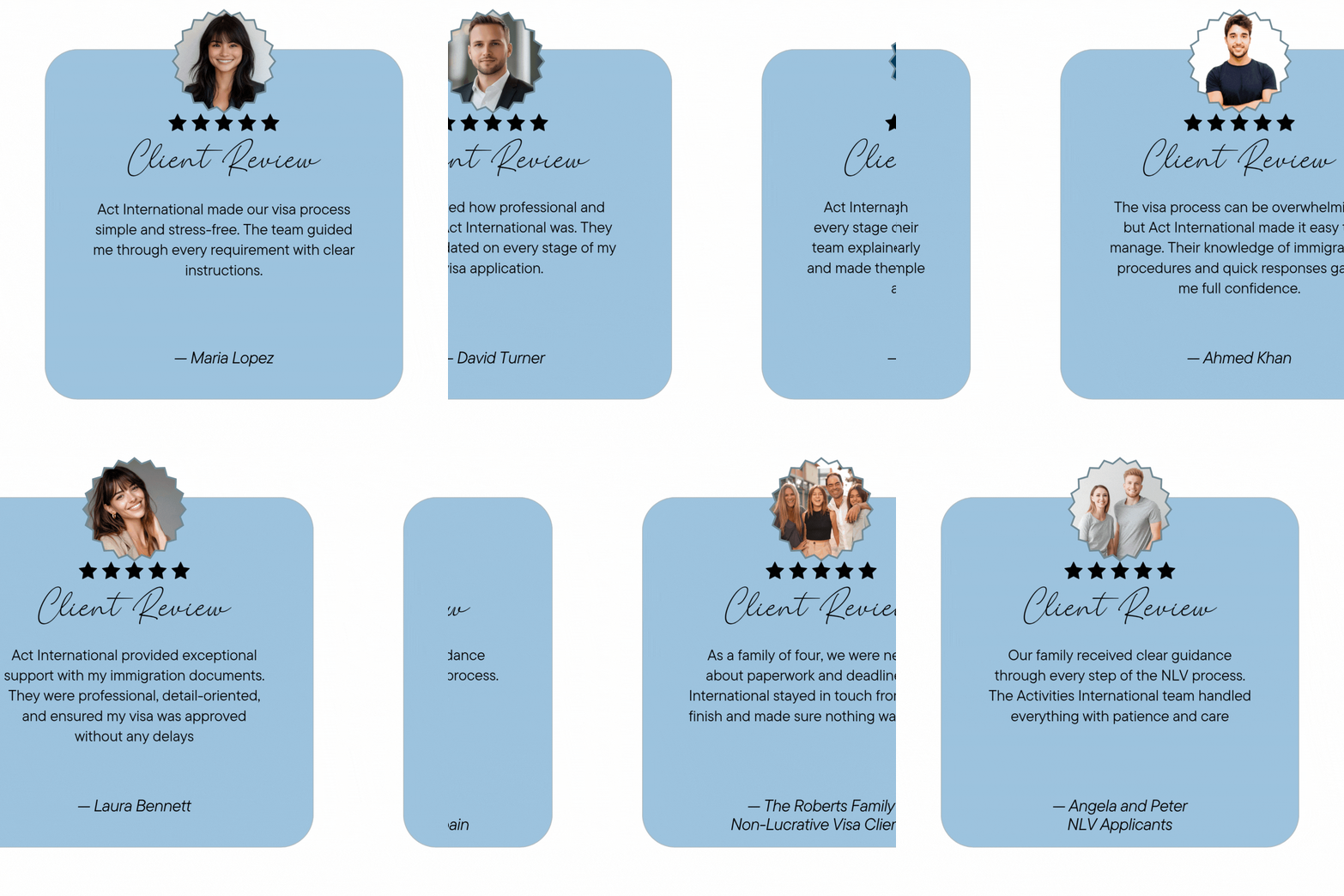
If you’d like to live in Spain without working here, whether you’re retiring, taking a career break or living on savings, pensions or rental income, the non-lucrative visa is usually the route. It’s popular with non-EU families moving to Alicante, and document-heavy.
Here’s what the requirement looks like in 2026, how much money you need to show, the insurance rules and the details consulates tend to check.
This article is general information, not legal advice. Requirements and amounts change, and each consulate publishes its own checklist, so always check the official pages linked below before you apply.
What is the non-lucrative visa?
Officially, it’s the autorización de residencia temporal no lucrativa: permission for a non-EU national, and their family, to live in Spain without doing any work or professional activity. It’s governed by articles 30 bis and 31 of Ley Orgánica 4/2000 and articles 60 to 63 of the immigration regulation, Real Decreto 1155/2024 (Ministerio de Inclusión, Hoja 6; Real Decreto 1155/2024, BOE).
It’s not for EU, EEA or Swiss citizens, who use the EU registration system instead.
Can I work remotely on it?
No. The visa is designed for people who don’t work. The Spanish Consulate in Los Angeles, for example, states plainly that it doesn’t allow teleworking (Consulado de España en Los Ángeles). If you plan to keep working for a foreign employer or clients, look at the digital nomad visa instead.

How much money do you need in 2026?
The funds requirement is tied to the IPREM (indicador público de renta de efectos múltiples). According to the Ministry, you must show (Hoja 6, linked above):
- 400% of the IPREM a month for the main applicant
- 100% of the IPREM a month for each family member
The IPREM is set in the State Budget. The figure in force is still the one fixed by the 2023 Budget Law, Ley 31/2022, as the 2023 budget remains extended: EUR 600 a month, EUR 7,200 a year (Ley 31/2022, BOE; SEPE, 2026 amounts). That gives:
| Who | Rule | Per month | For the first year |
|---|---|---|---|
| Main applicant | 400% of the IPREM | EUR 2,400 | EUR 28,800 |
| Each family member | + 100% of the IPREM | + EUR 600 | + EUR 7,200 |
So a couple needs EUR 3,000 a month (EUR 36,000 for the year), and a couple with two children EUR 4,200 a month (EUR 50,400 for the year). Some consulates also present the requirement as a lump sum for the year, so check your consulate’s own page.
What counts as proof?
The Ministry accepts any reasonable proof, including property titles, certified cheques, or credit cards backed by a bank certificate showing the available credit. If your money comes from shares in a company, you’ll also need a certificate and a sworn statement that you don’t work for it (Hoja 6).
Savings and passive income (pensions, dividends, rent) are the usual proof. Consulates can set their own format: Los Angeles, for instance, asks for bank documents showing your balance on 31 December and your average balance, and wants the funds to cover the whole first year.
Health insurance
You need public or private health insurance with an insurer authorised to operate in Spain (Hoja 6). Consulates can go further: Los Angeles asks for full cover with no deductible, no co-payments, no waiting periods and no limits. Travel insurance won’t do. Ask your insurer for a certificate in Spanish that confirms all of this.
The documents you’ll need
The Ministry’s list for the initial application (Hoja 6) is:
- Form EX-01, completed and signed
- Your full passport, valid for at least one year
- A criminal record certificate from every country you’ve lived in during the last five years
- Proof of funds for the period you’re applying for
- Proof of health insurance
- A medical certificate (Los Angeles asks for one issued no more than 90 days before you apply)
Foreign documents must be translated into Spanish by a sworn translator and, unless an exemption applies, legalised or carrying the Hague Apostille. Consulates add their own items, such as the national visa form, a photo and proof that you live in their area. You’ll also need an NIE for life in Spain, so read our NIE guide for 2026 too.
How to apply, step by step
1. Apply at your consulate
You apply in person at the Spanish consulate for the area where you live (or its appointed visa centre). The fee is paid with Modelo 790 código 052, epígrafe 2.1.1, and the amount varies by consulate and nationality, so check your consulate’s fee list (Hoja 6).
2. Wait for the decision
The immigration office has one month to decide once it receives the file from the consulate (Hoja 6). The overall wait is longer: Los Angeles, for example, quotes up to three months.
3. Collect the visa and travel
If it’s granted, you have one month to collect the visa in person. It’s valid for up to three months, and you must enter Spain within that time.
4. Get your TIE
Within one month of arriving, apply in person for your TIE (foreigner identity card) at the police office for your area. The documents are listed on the TIE procedures page. In Alicante, register on the padrón as soon as you have an address (see our padrón guide for Alicante).

How long it lasts, and renewing
The initial permit lasts one year from the day you enter Spain (Hoja 6). After that, the renewal lasts two years (Ministerio de Inclusión, Hoja 7). Renewal rules:
- When: in the two months before your permit expires, or up to three months afterwards (though applying late can lead to a penalty procedure). Applying in time keeps your current permit valid until the decision.
- How: online only, through the Mercurio electronic office.
- What you must show: enough funds and insurance for the renewal period, children of school age enrolled in school, and more than 183 days of actual residence in Spain during the calendar year.
- Fee: Modelo 790 código 052, epígrafe 2.2.1.
After five years of legal residence, you can usually move to long-term residence.
A word on tax
Living in Spain for more than 183 days in a calendar year generally makes you a Spanish tax resident, taxed on your worldwide income (Agencia Tributaria). Since renewal requires more than 183 days in Spain, plan for this before you move, and speak to a tax adviser about your pensions, investments and any double-taxation treaty.
Consulate tips that save time
- Read your own consulate’s page, not someone else’s checklist. Requirements and formats vary.
- Order criminal records early. They need translating and apostilling, which takes time.
- Show more than the minimum. Treat the figure as a floor, not a target.
How Activities International can help
You can do all of this yourself. If you’d like a hand, our Relocation Pack supports individuals and families moving to Spain, from the visa file to settling in Alicante. If you’d rather prepare your own file and have an expert check it, our Spain VisaReady document check reviews everything before your consulate appointment.
FAQ
How much money do I need for the non-lucrative visa in 2026?
EUR 2,400 a month (400% of the IPREM) for the main applicant, plus EUR 600 a month for each family member. For the first year, that’s EUR 28,800, plus EUR 7,200 for each family member.
Can I work remotely on a non-lucrative visa?
No. It’s for people who don’t work. Remote workers should look at the digital nomad visa.
Can I apply from inside Spain?
Generally no. The initial application is made at the Spanish consulate for the area where you live. Renewals are made online from Spain.
How long does it last?
One year at first, then two-year renewals. After five years, you can usually apply for long-term residence.
Last checked: October 2026. General information, not legal advice. Sources: Ministerio de Inclusión, Seguridad Social y Migraciones (Hojas informativas 6 and 7), BOE (Real Decreto 1155/2024; Ley 31/2022), SEPE, Consulado General de España en Los Ángeles (exteriores.gob.es), Agencia Tributaria, sede.administracionespublicas.gob.es.